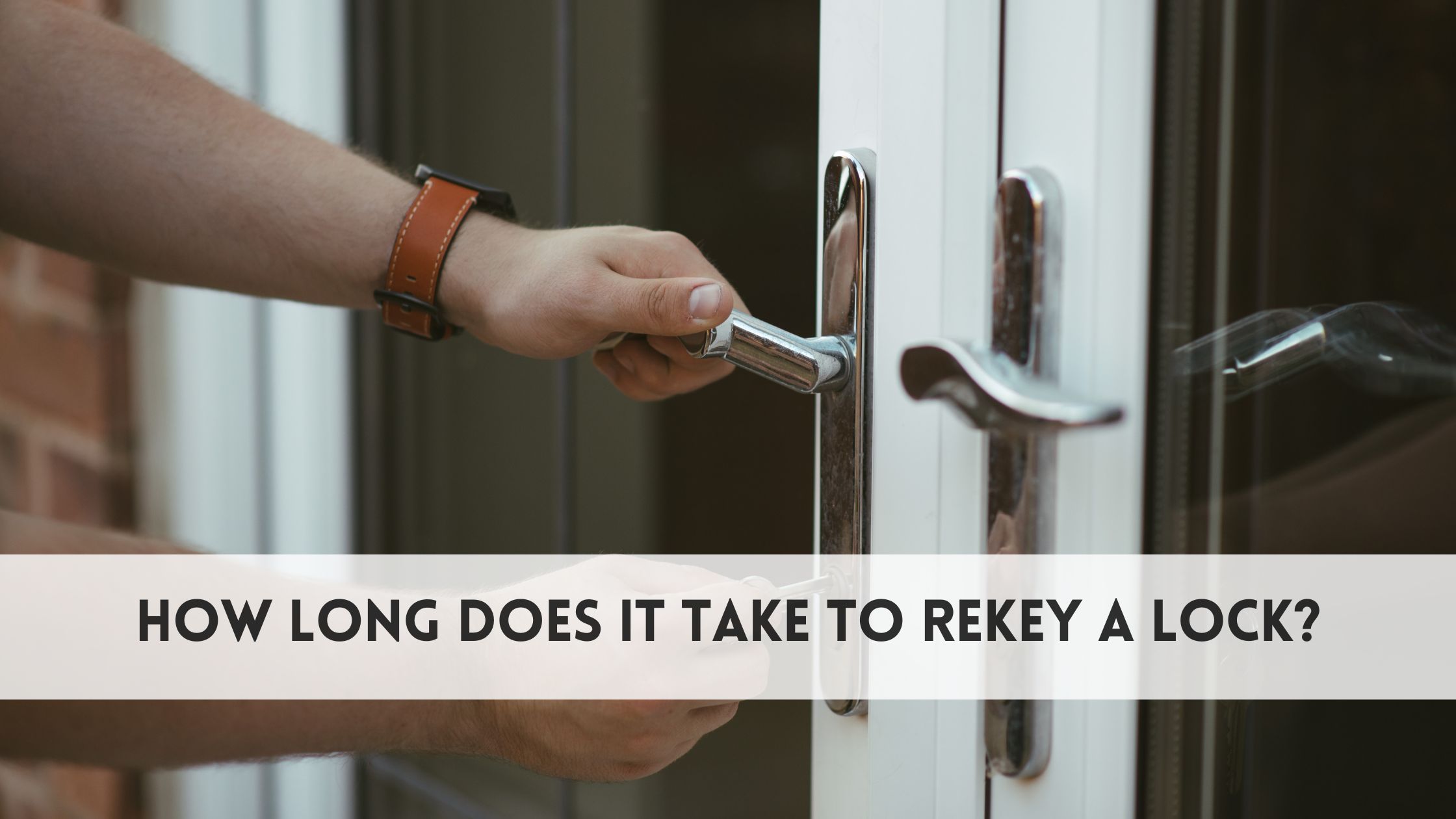
Rekeying is a practical, efficient, and cost-effective solution that ensures previous keys no longer provide access to your property, ideal for situations such as moving into a new home, employee turnover, lost keys, or upgrading overall security. So, How long does it take to rekey a lock? This is a common question among homeowners, property managers, and business owners looking to enhance their security without replacing existing hardware? Understanding the time commitment required to rekey a lock is essential in a fast-paced world where time and safety are top priorities.
How long does it take to rekey a lock?
On average, a professional locksmith takes 10 to 15 minutes to rekey a single standard lock. However, the total time can vary based on the lock type, the condition of the hardware, and the number of locks involved.
| Scenario | Estimated Time |
| Rekeying 1 basic deadbolt or doorknob | 10–15 minutes |
| Rekeying 3–5 locks | 30–60 minutes |
| Rekeying high-security commercial locks | 20–30 minutes per lock |
| Rekeying without the original key | Add 10–20 minutes |
The table clearly shows how rekeying time varies depending on the lock type and job complexity. A single residential lock is typically completed quickly, making rekeying a practical solution after a lock out of the door or a recent move. When multiple locks are involved, the total time increases but remains efficient compared to full lock replacement. High-security commercial locks require additional precision, which adds time per lock. Rekeying without the original key also extends the process due to extra labor. Overall, rekeying is a reliable way to protect your home or business while aligning with your security needs and budget.
How Do Locksmiths Rekey a Lock?
Rekeying a lock is a precise process that allows a locksmith to reset a lock to work with a new key without replacing the entire hardware. Here’s how professionals handle it step by step:
Remove the Lock from the Door
The locksmith carefully takes out the lock cylinder from the door, ensuring the mechanism isn’t damaged. This step is crucial to access the internal pins and tumblers, making it easier to rekey the lock efficiently while protecting your home’s security.
Disassemble the Lock Cylinder
Once removed, the cylinder is taken apart to expose the pins inside. Each pin corresponds to a specific key cut. This step allows the locksmith to adjust the pins so the new key will turn smoothly and reliably.
Replace or Rearrange the Pins
The locksmith either swaps out or repositions the pins according to the new key’s pattern. This ensures the lock only responds to the new key, giving homeowners control over access and aligning with their security needs and budget.
Reassemble and Test the Lock
After rekeying, the cylinder is reassembled and reinstalled in the door. The locksmith tests it multiple times to confirm smooth operation. This final check prevents a lock out of the door situation and guarantees proper function.
Should You Rekey Your Lock or Replace It?
While securing your home or business, it’s important to choose the right solution for your needs. Here’s how to determine whether rekeying or replacing is the better option:
Rekeying Is a Cost‑Effective Solution
Rekeying your lock is often cheaper than replacing the entire hardware while still ensuring security. It uses the lock that is already in place, allowing you to change keys without major work. This is ideal for homeowners or renters upgrading access without high costs.
Replacing May Be Necessary for Advanced Security
If your lock is old, damaged, or incompatible with modern security systems, getting the lock replaced may be the safer option. Replacement ensures stronger protection, integrates with new systems, and provides peace of mind when rekeying isn’t sufficient.
Factors That Affect Rekeying Time
While the process is usually quick, certain factors can impact how long it takes to rekey a lock.
Lock Type and Complexity
The time to rekey a lock depends on the type of lock. Standard residential locks are quick to rekey, while high-security locks require more precision and attention, increasing the overall service time for safety and reliability.
Number of Locks Being Rekeyed
Rekeying multiple locks takes longer because each lock needs to be disassembled and adjusted individually. The process becomes more intricate when each lock requires a different key, affecting the total time and planning for locksmith services.
Condition of the Lock
Worn or damaged locks can slow down the rekeying process. If pins are stuck or the cylinder is rusted, additional care is needed to prevent damage, which can extend the time needed despite the locksmith’s fast arrival.
Access and Location
Locks in hard-to-reach areas or commercial settings may take longer to rekey. Complicated door systems, integrated security setups, or electronic locks can increase time due to additional steps for high-security locks and ensuring proper functionality.
Final Words
So, How long does it take to rekey a lock? Understanding how long it takes to rekey a lock is essential when planning a security upgrade for your home or business. On average, a skilled locksmith can complete the task in just 10 to 15 minutes per lock, making it one of the quickest and most cost-effective ways to regain control over who has access to your property. This process allows you to maintain existing hardware while enhancing overall safety.
Whether you’ve moved into a new residence, lost a key, or experienced a personnel change at your business, rekeying offers a practical solution without the need for full lock replacement. If you’re unsure whether rekeying or replacing your locks is the better option, our licensed professionals are here to guide you. We provide reliable, efficient locksmith services tailored to your needs, ensuring your property remains protected at all times.